


RV Short Queen Mattress Buying Guide: 9 Must-Know Tips
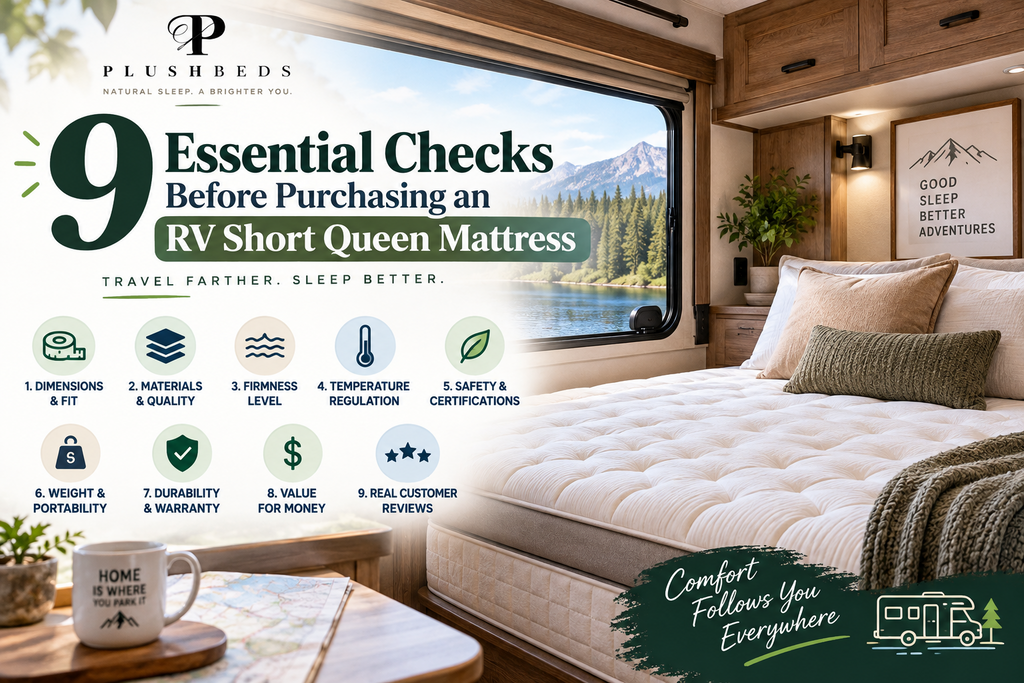
9 Essential Checks Before Purchasing an RV Short Queen Mattress
TL;DR
- Measure your RV bed frame carefully to confirm the exact short queen dimensions and shape.
- Check foam density and support layers for long-term comfort and durability.
- Choose a lightweight mattress that is easy to move, and fits through your RV entryway.
- Select firmness based on your sleeping position and personal comfort needs.
- Look for breathable materials and cooling features to reduce heat retention.
- Check edge support and construction quality to prevent sagging and improve durability.
- Look for safety certifications, such as CertiPUR-US and low-VOC materials.
- Review the trial period, return policy, and warranty before purchasing.
- Match mattress quality and budget to how frequently you use your RV.
According to the survey, around 37 million Americans, including 92% of current RV owners, plan at least one RV trip each summer. If you're one of them, choosing the right RV short queen mattress can make every mile more comfortable.
But shopping for an RV short queen mattress is a little different. Your RV bedroom is smaller than a home bedroom. Every inch matters. A mattress that looks perfect online can turn into a headache once it lands inside your rig.
Maybe it hangs off the frame. Maybe it feels too firm after one night on the road. Maybe it traps heat during a summer trip. These problems are common, and they are avoidable.
This guide walks you through nine practical checks. Each one helps you pick a mattress that fits your space and supports your body. Let's get your RV sleep setup right the first time.
1. Know Your Exact RV Bed Size First
RV beds don't follow standard home mattress rules. A short queen measures around 60 inches wide and 75 inches long. A regular queen measures 60 by 80 inches. That five-inch difference matters a lot inside a travel trailer.
The best RV short queen mattress fits your exact bed platform without overhang, giving you maximum comfort while preserving valuable space inside your RV.
- Measure width, length, and depth.
- Write down the numbers before you shop.
- Check corners for curves or cutouts.
Many RV frames have rounded corners to save space. Standard mattresses won't sit right in these frames. Confirm your frame style before you order anything.
Check The Frame Style, Too
Some RVs use slide-out beds. Others use platform bases with slats. Your mattress choice depends on this setup.
For a slide-out bed, you really want a mattress that won't shift during travel. And, for a slatted base, it needs decent underneath support so the mattress doesn't sag in between those slats.
2. Compare Foam Density And Support Layers
Not all foam is equal. Cheap foam breaks down fast. Good foam holds its shape for years. Before you buy, check the density rating.
- Try to find memory foam that has a density of around 4 pounds or more.
- Also, look for multiple layers because usually it helps with support and comfort in a more subtle way.
- Ask about the support core thickness.
- Avoid mattresses with no listed foam specs.
A mattress with clear density numbers usually performs better long-term. Vague listings often hide lower-quality materials.
3. Think About Weight and Portability
RV mattresses need to be light enough to move. You might swap them seasonally, or clean underneath them often. Heavy mattresses make this task frustrating.
- Choose a mattress under 60 pounds if possible.
- Check if it comes with handles.
- Look for compressed shipping options for easy setup.
- Confirm it fits through your RV door and hallway.
Doorways in RVs are narrower than home hallways. A mattress that seems fine on paper might not fit through your entryway.
4. Test The Firmness Level Before Committing
Firmness affects your sleep quality directly. RV mattresses often come in medium or medium-firm options. This range works for most sleepers, but not everyone.
- Side sleepers usually need softer support.
- Back sleepers do well with medium firmness.
- Stomach sleepers need firmer surfaces.
- Couples should pick a middle ground option.
Read Real Customer Reviews for Firmness Feedback
Company descriptions can feel biased. Real customers, they give honest feedback about how firm a mattress actually feels.
Try to search for reviews where they talk about body weight and also sleep position, because it gives you a more precise picture than just marketing copy.
5. Check Heat Retention and Breathability
RVs get hot fast, especially during summer road trips. A mattress that traps heat ruins your sleep quickly.
In fact, a 2026 National Sleep Foundation report identifies temperature as one of the leading causes of disrupted sleep, making breathable mattress materials essential for comfortable RV travel.
- Look for gel-infused foam options.
- Check for breathable cover fabric.
- Avoid solid foam blocks with no airflow design.
- Read about cooling technology claims carefully.
Breathable mattresses help regulate temperature during long drives and hot campground nights.
6. Look at Edge Support and Durability
RV beds get bumped during travel. Edge support keeps the mattress stable, and prevents sagging near the sides.
- Check for reinforced edge foam.
- Ask about warranty coverage for sagging.
- Look for stitched borders that hold shape.
- Avoid mattresses with soft, flimsy edges.
A good RV short queen mattress with strong edges lasts longer, even with constant road vibration and movement.
7. Consider Off-Gassing and Material Safety
New foam mattresses often release a smell when unboxed. This is called off-gassing. It's normal, but you should know what to expect.
- Check for CertiPUR-US certification.
- Look for low VOC materials.
- Air out the mattress before first use.
- Avoid brands with no safety certification listed.
Certified foam means the materials have gone through testing for harmful chemicals. This matters more inside a small enclosed RV space.
8. Check Return Policy and Trial Period
Buying a mattress online carries risk. You can't test it in person before it arrives. A solid return policy protects your purchase.
- Look for at least a 30-night trial period.
- Check who pays for return shipping.
- Read the fine print on refund conditions.
- Confirm the warranty length in writing.
A generous trial period gives you time to test the mattress on actual road trips. This is the best way to know if it truly works for your RV lifestyle.
9. Match The Mattress to Your Travel Style
Weekend campers and full-time RVers have different needs. A mattress for occasional trips can be simpler. A mattress for full-time living needs more durability.
- Full-time travelers should invest in higher-quality foam.
- Occasional campers can choose budget-friendly options.
- Consider how often you'll be sleeping on it each month.
- Match your budget to your actual usage pattern.
Your travel frequency should guide your mattress investment. Spending more makes sense if you sleep in your RV most nights of the year.
Final Thoughts
Choosing the right RV short queen mattress takes a bit of research, but it pays off with better sleep on every trip.
Measure your bed frame first. Check the foam quality next. Before you settle on it, think about firmness, temperature regulation, and edge stability a bit more, not just once.
Also, don't forget to read the return policy too, because it'll shield you if it feels off once it arrives, or if it's not quite right in the end.
A good mattress turns your RV into a real home away from home. Take your time with these nine checks, and you will sleep a little better on every road you travel.
Find Your Perfect RV Mattress Today
Browse PlushBeds RV mattresses, and choose the ideal fit for your RV. Invest in better sleep before your next adventure.
Frequently-Asked Questions
1. Why does mattress size matter so much in an RV?
RV bedrooms are smaller than typical home bedrooms, so every inch counts for real. A mattress that overhangs, or just doesn't fit the frame, wastes precious space and can create that restless discomfort. Measuring your specific bed platform first helps you sidestep expensive mistakes later on.
2. What foam quality should I look for in an RV mattress?
Try memory foam with a density of about 4 pounds or more, and make sure it has several supporting layers too, not just one. Vague listings without foam specs often signal lower quality. Clear density numbers usually mean better long-term performance and durability.
3. Why is edge support a big deal for RV mattresses?
RV beds get jolted, bumped, and they vibrate while you are traveling, so the edges really need reinforcement. Strong, stitched borders keep the bed from sagging near the sides. If the edges are flimsy or sort of weak, they wear down faster, mainly because of constant road movement and all the handling that happens during trips.
4. Is off-gassing normal in new RV mattresses?
Yes, it's pretty common; new foam sometimes gives off that smell right after unboxing. Check for CertiPUR-US certification, and try to choose low-VOC materials for safety, because that helps with the fumes. Let it air out for a while before you sleep on it, especially since an RV is a small, closed environment, and the odor can stay longer.
5. What makes PlushBeds different from other RV mattress brands?
PlushBeds focuses on precise RV sizing, quality certified foam, and breathable materials built for small spaces. Their collection targets real RV comfort problems like heat and fit, backed by a trial period for peace of mind.
Link to Us!
If you found this article useful and shareable, please copy and paste the following into the html code of your website or blog:
Learn More About Going Green at the <a href="https://www.plushbeds.com/blogs/green-sleep/rv-short-queen-mattress-buying-guide-9-must-know-tips">PlushBeds Latex Mattress Blog</a>.
*Please note that we DO NOT accept guest blog posts. Any inquiries into this will be respectfully left unanswered.
The post RV Short Queen Mattress Buying Guide: 9 Must-Know Tips appeared first on PlushBeds Latex Mattress Blog.