


Latex Mattress Topper Guide: Pressure Relief and Support
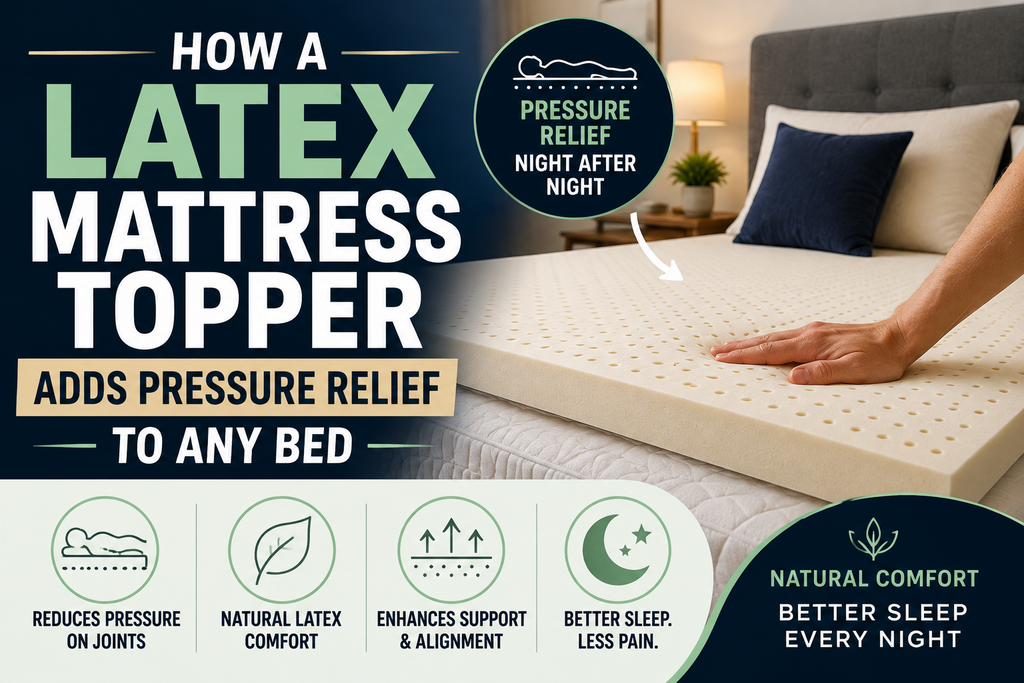
How a Latex Topper Mattress Adds Pressure Relief and Support to Existing Beds
You do not need a new mattress to improve the way you sleep. In many cases, the real problem is not the mattress itself, but the worn-out comfort layer your body interacts with every night. That is why more sleepers are turning to latex mattress pads, instead of replacing an otherwise usable bed.
A high-quality latex mattress pad instantly changes the feel of your sleep surface by adding responsive support, balanced cushioning, and natural airflow exactly where your body needs it most. Unlike synthetic foam that traps heat or flattens over time, latex adapts to pressure, without losing structure, helping reduce morning stiffness, overheating, and uneven support.
Whether you choose a breathable latex foam mattress pad, a latex mattress topper queen for shared comfort, or a full latex topper mattress for long-term durability, the upgrade delivers a noticeable difference in better sleep quality without the expense of buying a completely new mattress.
Why Your Current Mattress Falls Short
Mattress materials compress with use. Foam cores lose density. Innerspring systems weaken. The result is uneven support that concentrates pressure on your hips, shoulders, and lower back rather than distributing it.
A degraded sleep surface does more than cause discomfort. It actively works against you:
- Pressure buildup at the hips, shoulders, and lower back disrupts sleep cycles, without you realizing it
- Spinal misalignment develops gradually as the surface stops supporting your natural posture
- Heat retention increases as compressed foam loses its breathability
- Excessive movement through the night is your body's attempt to find relief, but it never gets it
A latex topper mattress adds a corrective layer that compensates for surface deterioration, while the mattress core still provides foundational structure. You get a transformed sleep surface without replacing what still works.
What Sets Latex Apart?
Latex is derived from the natural rubber tree sap, and its physical properties are distinct from every synthetic alternative. Memory foam contours under body heat, but traps warmth and responds slowly to movement. Wool and cotton compress, and lose loft quickly. Synthetic foam degrades within a few years.
Latex performs differently on every dimension that matters for sleep:
- Resilience: Returns to its original shape immediately after you shift position, without the sluggish, stuck feeling of memory foam
- Breathability: An open-cell structure allows continuous airflow through the material, dissipating heat rather than retaining it
- Durability: A quality latex mattress pad maintains its properties for 10 to 20 years under normal use
- Responsiveness: Adjusts to changes in body position in real time, providing consistent support regardless of how you sleep
No synthetic topper material matches this combination. Latex earns its premium positioning because the performance holds up, not just on the first night, but for years afterward.
How a Latex Foam Mattress Pad Delivers Pressure Relief

Pressure relief is not about softness; it is about load distribution. When you lie down, your body weight concentrates at a handful of contact points. A degraded mattress resists those points rather than accommodating them, which is the root cause of the joint pain and stiffness many sleepers wrongly attribute to age or posture.
A latex foam mattress pad compresses slightly at each contact point, while the surrounding material stays supportive. The load spreads laterally across several inches rather than concentrating in one spot. The practical effect by body part:
- Hips: Sink just enough to keep the spine neutral, without dropping too far and creating a hammock effect
- Shoulders: Pressure is absorbed rather than deflected, eliminating the ache that side sleepers know well
- Lower back: The natural lumbar curve is supported, rather than bridged over
- Heels: Cushioning eliminates the hard resistance that causes overnight heel pain
This balance of localized give and broader support is why latex performs well across all sleep positions, not just one.
Does a Latex Mattress Topper Queen Size Work for Couples?
Yes, a latex mattress topper, queen size, works exceptionally well for couples because it balances comfort, support, and motion control across the entire bed. Couples often face a common problem: two people with different body weights, sleep positions, and comfort preferences sharing the same mattress.
What feels supportive for one person may feel too firm or too soft for the other. A latex mattress topper, queen size, solves this better than almost any other topper option.
Key advantages for two sleepers:
- Motion isolation: Movement on one side is absorbed at the point of contact, rather than traveling across the bed
- Independent response: Each side reacts to the weight above it, so a heavier partner does not drag down the surface and compromise the lighter partner's support
- Consistent coverage: The topper covers the full queen surface with uniform support, eliminating the soft edges and firm centers that plague older mattresses
For couples where one partner is a light sleeper or where both partners have meaningfully different body weights, a queen latex topper is one of the most effective and affordable interventions available.
Choosing the Right Latex Mattress Pads

Two primary latex types are available, each suited to different sleepers:
Dunlop Latex
- Denser, heavier, and firmer
- Better suited to back and stomach sleepers who need consistent support
- More affordable and widely available
Talalay Latex
- Softer and more uniform cell structure
- Better for side sleepers who need cushioning at the hip and shoulder
- Premium price point, but exceptional for pressure relief applications
For material composition, natural latex is the clear long-term choice across all latex mattress pads. It outperforms synthetic and blended alternatives on durability, breathability, and chemical safety. Synthetic latex costs less upfront, but typically requires replacement within five to seven years, negating the savings entirely.
Thickness and Firmness Guide for Latex Mattress Toppers
Thickness determines how significantly the topper changes the feel and support of your existing mattress, while firmness affects how the topper responds to body weight and sleeping position. Choosing the right combination is what creates proper pressure relief, spinal alignment, and long-term comfort.
| Thickness | Best For | Firmness | ILD Rating | Recommended For |
|---|---|---|---|---|
| 1-2 inches | Light comfort adjustment on a mostly intact mattress | Soft | 14 ILD | Back or side sleepers who enjoy sinking into a softer sleep surface |
| 2-3 inches | The most popular range, balanced pressure relief, and noticeable support improvement | Medium | 28 ILD | Side sleepers need the ideal balance of comfort and support |
| 3-4 inches | Heavy correction for severely worn or extremely firm mattresses | Medium-Firm | 36 ILD | Back or stomach sleepers who require stronger spinal support |
| 3-4 inches | Best for sleepers needing maximum support and mattress stabilization | Extra-Firm | 44 ILD | Sleepers over 250 lbs or anyone who prefers a very firm sleep surface |
Heavier sleepers compress the topper more deeply and need a firmer rating to prevent excessive sinkage. Lighter sleepers get better pressure relief from a softer option that allows the material to fully contour to their profile.
Maintaining Your Latex Mattress Pad
A latex mattress pad requires minimal upkeep to reach its full service life:
- Use a mattress protector over the topper to prevent moisture and stain penetration
- Rotate every three to six months to distribute wear evenly across the surface
- Spot-clean only with mild soap and cold water; machine washing damages the latex cell structure
- Air it out periodically by removing it from the bed for a few hours every couple of months
- Avoid direct sunlight: UV exposure degrades natural rubber over time
With these basic habits in place, a quality latex topper mattress will remain structurally sound for a decade or more.
Frequently-Asked Questions
Q: How long does a latex mattress pad typically last?
A high-quality natural latex mattress pad lasts 10 to 20 years with normal use. Natural latex holds its structure and resilience far longer than synthetic alternatives, making it a stronger long-term investment.
Q: Is a latex foam mattress pad effective for back pain?
Yes. A latex foam mattress pad distributes body weight evenly, reducing pressure on the lumbar spine and filling the lower back's natural curve, directly addressing the most common cause of sleep-related back pain.
Q: What are the dimensions of a latex mattress topper queen?
A latex mattress topper queen measures 60 by 80 inches, fitting any standard queen bed. It comes in thicknesses from one to four inches, with two to three inches being the most popular choice.
Q: Should I choose Dunlop or Talalay for my latex mattress pads?
Choose Dunlop for firmer support, ideal for back and stomach sleepers. Choose Talalay for softer cushioning, better for side sleepers. Both latex mattress pads are durable; the difference is feel, not quality.
Q: How do I prevent a latex topper mattress from shifting?
Wrap a fitted sheet around both the topper and mattress together to anchor them. Some latex mattress topper queen models include non-slip covers or straps for added security on more active sleepers.
Link to Us!
If you found this article useful and shareable, please copy and paste the following into the html code of your website or blog:
Learn More About Going Green at the <a href="https://www.plushbeds.com/blogs/green-sleep/latex-mattress-topper-guide-pressure-relief-and-support">PlushBeds Latex Mattress Blog</a>.
*Please note that we DO NOT accept guest blog posts. Any inquiries into this will be respectfully left unanswered.
The post Latex Mattress Topper Guide: Pressure Relief and Support appeared first on PlushBeds Latex Mattress Blog.