


Premium vs. Average Pillow Top Full Mattress: Key Differences
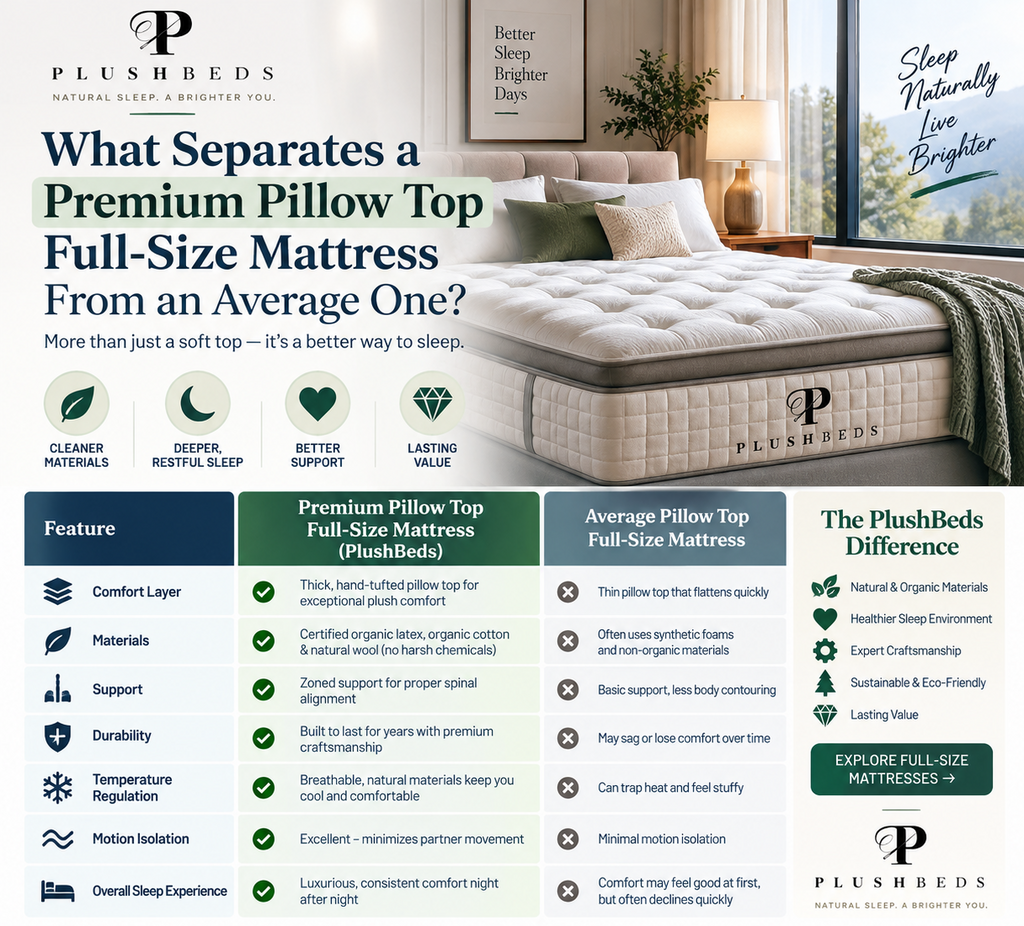
What Separates a Premium Pillow Top Full-Size Mattress From an Average One?
TL;DR
- Look beyond the surface appearance because premium and average pillow-top mattresses can look similar.
- Check the comfort layer construction, including thickness, reinforcement, and stitching quality.
- Prefer durable natural materials such as latex, wool, and cotton over basic polyester and low-grade foam.
- Check whether the pillow-top is fully tufted to prevent the filling from shifting, bunching, or forming lumps.
- Examine the support core, including spring system and foam density, because it determines long-term structural support.
- Compare spring count and foam density, instead of relying only on the mattress's appearance or marketing claims.
- Consider temperature regulation, with breathable covers and natural fibers helping manage heat and moisture.
- Review the expected lifespan and construction quality before choosing a mattress.
- Read the warranty terms carefully, including sagging thresholds, coverage period, and replacement conditions.
- Focus on internal construction and materials, not just the plush feel you notice when first testing the mattress.
A premium pillow-top mattress and an average one can look identical on a showroom floor. The real difference lies in the comfort layer construction, the fill material, the tufting method, the support core, and the warranty terms behind the product. As per a write-up, the pillow top may develop body impressions over time, especially for sleepers over 200 pounds. In fact, many pillow-top owners report noticeable sagging within the first three years, regardless of body weight. That figure exposes a simple fact. Two mattresses labeled premium do not always deliver the same build quality or the same lifespan.
This article outlines the exact factors that separate a genuinely premium pillow-top full-size mattress from an average one, so a buyer can evaluate construction quality with confidence, rather than relying on surface appearance.
The Comfort Layer Sets the Foundation for Quality
Every pillow-top full-size mattress carries a plush layer stitched permanently onto the surface of the bed. This layer decides the initial feel of the mattress, and plays a major role in how long that feel actually lasts.
A premium mattress uses a substantial, well-constructed comfort layer with reinforced stitching across the full surface. An average mattress typically uses a thinner layer, attached with minimal reinforcement to reduce manufacturing cost.
The construction differences are measurable and consistent:
- Premium beds layer high-density foam, or natural fill for lasting structure
- Average beds rely on a single thin layer that compresses within months
- Premium stitching secures the fill evenly across the entire surface
- Average stitching frequently leaves sections unsecured, allowing the filling to shift
This single layer influences nearly every aspect of comfort and durability that follows.

Fill Material Determines Long-Term Performance
The material inside the comfort layer governs how the mattress breathes, and how consistently it holds its shape over repeated use.
- Premium mattresses favor natural fibers such as wool, cotton, and latex. These materials recover their shape after sustained pressure.
- Average mattresses typically rely on polyester or basic foam. These materials compress under weight, and rarely regain their original loft once flattened.
Materials Distinguish Genuine Quality From Marketing Claims
Material choice determines spinal support during sleep, and the visible condition after several years of regular use. It is not a marketing detail printed on a label.
A premium full-size pillow top mattress typically includes:
- Natural latex for responsive support and long-term durability
- Wool for effective temperature regulation and moisture control
- Breathable cotton covers for consistent airflow through the night
- Dense foam that resists lasting body impressions
An average mattress commonly relies on:
- Low grade polyester fiber that flattens under normal use
- Thin synthetic foam with a limited service life
- Covers that retain heat and trap moisture against the body
Research comparing latex and polyurethane foam mattresses found that latex reduced peak body pressure by up to 35.1% and created a more even pressure distribution, supporting better comfort and spinal alignment.
Tufting Technique Determines Structural Longevity
Tufting anchors the filling through the layers using thread or buttons so the material cannot migrate or bunch over time. It appears to be a minor manufacturing step, yet it has a direct impact on lifespan.
A premium pillowtop full-size mattress applies proper tufting across the full surface. This keeps the fill evenly distributed for years of consistent use.
An average mattress frequently omits tufting entirely. Without this anchoring, the filling drifts toward the edges. Lumps and dips typically develop within months rather than years.
A useful evaluation question addresses this exact detail directly. Is the comfort layer tufted throughout, or only stitched along the border? The answer reveals a great deal about expected longevity.
Support Core Quality Defines Overall Performance
The support core beneath the comfort layer carries body weight, and maintains spinal alignment throughout the night. This component performs the essential structural work, even though buyers rarely inspect it closely.
A premium mattress pairs its comfort layer with a robust spring system or high-density foam base engineered for sustained pressure over many years.
An average mattress often pairs an attractive top layer with a thin or weak support core. The result appears impressive in a showroom setting, yet deteriorates rapidly under regular home use.
Spring Count and Density Indicate Genuine Build Quality
Spring count and foam density figures reveal construction standards that surface appearance cannot communicate.
- Premium full-size mattresses commonly use one thousand or more individually-wrapped pocket springs.
- Average mattresses often rely on open coil systems with considerably fewer springs.
- Higher-density foam bases resist body impressions for a longer period
- Lower-density foam bases show visible depressions within a year or two of regular use
A greater spring count paired with higher foam density produces better weight distribution, and slower wear across the entire mattress surface.
Durability and Lifespan Reveal True Construction Standards
Lifespan represents the clearest measurable distinction between premium and average pillow top mattresses.
| Mattress Category | Typical Lifespan | Comfort Layer Replaceable | Common Issue Reported |
|---|---|---|---|
| Average pillow top | 3 to 5 years | No | Rapid sagging and lumps |
| Mid-range pillow top | 5 to 7 years | No | Gradual wear over time |
| Premium pillow top | 8 to 10 years | Occasionally, with select brands | Slow gradual softening |
This comparison demonstrates why construction quality carries more weight than surface appearance when evaluating a mattress for long-term use.
Temperature Regulation Affects Sleep Quality Directly
Heat retention receives limited attention during a typical mattress purchase, yet it directly influences sleep quality every single night.
Premium mattresses incorporate breathable natural covers and fibers that draw moisture away from the body. Average mattresses trap heat within dense synthetic foam layers that lack proper ventilation.
An overly warm mattress disrupts deep sleep cycles throughout the night. This issue affects rested feeling the following day, and gradually impacts the hygienic condition of the mattress itself over time.

Warranty Coverage Exposes Genuine Manufacturing Confidence
Warranty terms frequently reveal more about mattress quality than any showroom presentation. A thorough evaluation should include the following points before purchase.
- The exact depth of sagging required before a warranty claim applies
- Whether the warranty measurement occurs with no weight placed on the mattress
- The total number of years the coverage extends
- Whether the manufacturer replaces the mattress entirely or offers partial repair only
Premium manufacturers typically set lower sagging thresholds paired with longer coverage periods. Average manufacturers often set higher thresholds near 38mm or 50mm that rarely align with the sagging a sleeper actually experiences night after night.
Final Thoughts
A premium pillow-top full-size mattress and an average one can appear remarkably similar during an initial showroom visit. The genuine differences emerge through fill quality tufting technique, supporting core construction, and warranty terms. Evaluate the materials used within the comfort layer. Confirm whether proper tufting secures the filling. Review spring count and foam density figures carefully. Check warranties prior to making a buying decision. All of these factors contribute to the performance of the mattress, and will help you ensure that it will perform well for many years, or will need to be replaced sooner.
A mattress is used to carry the body for about a third of every day, for many years. Such a daily need requires careful consideration based on the facts of the construction, not simply the first impression that is gained in a showroom.
Ready to experience the comfort of a truly premium pillow-top full-size mattress? Explore PlushBeds luxury collection, crafted with natural materials, lasting support, and exceptional comfort for years of restful sleep.
Frequently-Asked Questions
1. How long does a premium pillow-top mattress really last?
A premium pillow-top full-size mattress typically lasts 8 to 10 years, though some people get less, depending on how they use it. The average one tends to give you only 3 to 5 years, and that can feel sooner if the support core is weaker.
With better filling, decent tufting, and a solid support layer underneath, the lifespan gets extended quite a bit. Honestly, the build quality matters more than how nice the top looks.
2. What fill material is best for a pillow-top mattress?
Natural latex, wool, and cotton perform best long-term. They recover shape after pressure and regulate temperature well. Polyester and basic foam compress quickly, and rarely bounce back. Material choice directly affects support and durability.
3. Why does tufting matter in a pillow-top mattress?
Tufting sort of anchors the filling through the layers, so it keeps from shifting around or turning lumpy. If you skip it, the filling tends to drift toward the edges. Then, after a while, you get those dips, and little lumps start showing up, sometimes within months. Full surface tufting, not only border stitching, says a lot about the real build quality.
4. Does spring count affect mattress quality?
Yes. Premium mattresses usually have 1,000+ individually wrapped pocket springs, though some average models rely on fewer open coils. With more springs plus a thicker, denser foam base, the mattress can handle body weight more evenly, and tends to slow that noticeable sagging or wear as time goes on.
5. What should I check in a mattress warranty?
Check the required sagging depth for claims, whether measurements happen unweighted, coverage length, and if replacement or only repair is offered. Average warranties usually set thresholds around 38mm or 50mm, but they rarely match what happens in the real world with sagging.
6. Where can I get a truly premium pillow top, full-size mattress?
PlushBeds has a luxury pillow top lineup that uses natural components such as latex and wool. Our mattresses emphasize lasting support and breathability. Take a look through our selection to compare the build quality against the usual showroom choices.
Link to Us!
If you found this article useful and shareable, please copy and paste the following into the html code of your website or blog:
Learn More About Going Green at the <a href="https://www.plushbeds.com/blogs/green-sleep/premium-vs-average-pillow-top-full-mattress-key-differences">PlushBeds Latex Mattress Blog</a>.
*Please note that we DO NOT accept guest blog posts. Any inquiries into this will be respectfully left unanswered.
The post Premium vs. Average Pillow Top Full Mattress: Key Differences appeared first on PlushBeds Latex Mattress Blog.