


Memory Foam Topper Guide: Firmness and Sleep Position
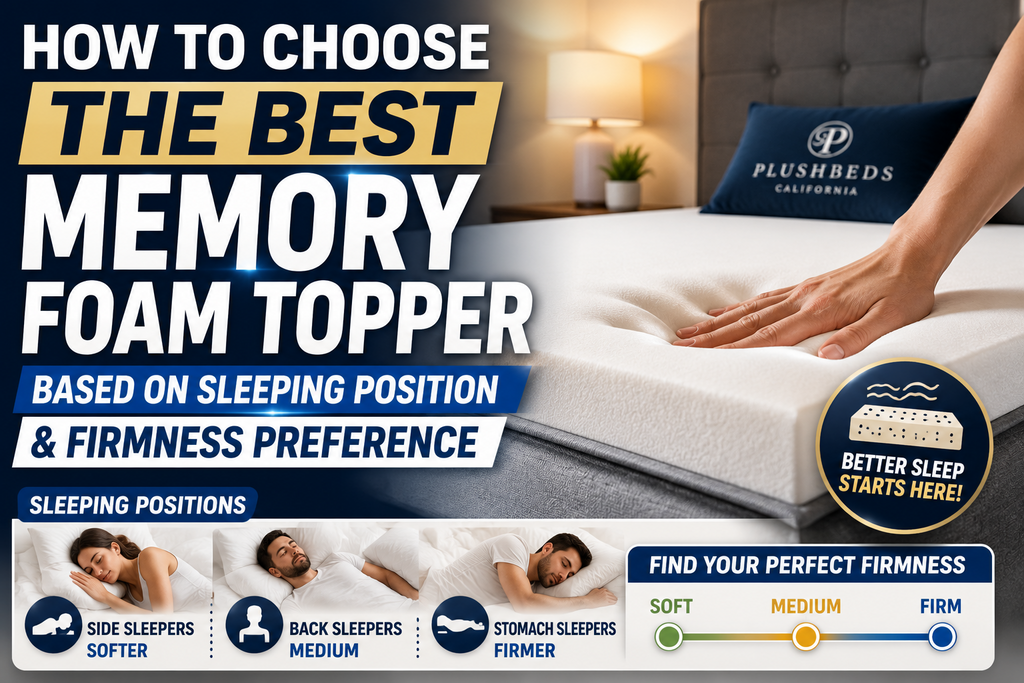
How to Choose the Best Memory Foam Topper Based on Sleeping Position and Firmness Preference
You wake up tired. Your back aches. Your shoulders feel stiff. Sound familiar? The problem is not always your mattress. Sometimes the fix is simpler than you think. A memory foam topper can completely change how you sleep at night. It adds a fresh comfort layer right on top of your existing bed. It hugs your body. It eases pressure points. It makes sleep feel deeper and more restful.
But here is the thing: not every memory foam bed topper works for every sleeper. Your sleeping position matters. Your firmness preference matters. Choosing the wrong topper can make things worse. This guide breaks it all down in a clear and simple way, so you pick the right one the first time.
Why Your Sleeping Position Changes Everything About Your Topper Choice
Think about how you land on your bed each night. Do you roll onto your side? Do you stretch flat on your back? Do you lie face down? Each position puts pressure on different parts of your body. A memory foam topper responds to that pressure differently, depending on its density and thickness.
Getting this match right is the single most important step in choosing bed toppers memory foam products. Let us walk through each position, and what it needs.
Side Sleepers Need Pressure Relief Above All Else
Side sleeping is the most common position, with around 60-70% of people typically sleeping on their side. However, it also places the most pressure on the hips and shoulders. Over time, these areas press deeper into the mattress, creating uncomfortable pressure points that can lead to pain, stiffness, and disrupted sleep.
- Choose a soft to medium memory foam topper between 2 and 4 inches thick
- Look for a density of 3 to 4 pounds per cubic foot for deep contouring
- The topper should cradle your shoulder, without letting your spine curve sideways
- Gel-infused foam toppers work well for side sleepers who sleep hot
- A 3-inch topper hits the sweet spot between comfort and spinal support
Side sleepers who skip this step often wake up with shoulder pain, or hip soreness. The right foam topper for mattress use takes that pressure off completely.

Back Sleepers Need Balance Between Cushion and Support
Back sleeping is one of the healthiest positions for spinal alignment. But it still needs the right surface. A surface that is too soft lets your lower back sink too deeply. A surface that is too firm creates a gap under your lumbar area.
- Choose a medium-firm memory foam topper around 3 inches thick
- A density of 4 to 5 pounds per cubic foot gives firm yet responsive support
- The topper should fill the natural curve of your lower back, without pushing it upward
- Look for open-cell foam construction, so air moves freely through the night
How Firmness Levels in Foam Toppers for Mattresses Actually Work
Firmness in foam toppers for mattresses is not just about how hard or soft something feels. It is about how the foam responds to your weight over time. A heavier person sinks deeper into the same foam than a lighter person does. That changes everything about how a topper performs.
Firmness is not one-size-fits-all. Your body weight and sleep style work together to determine which density truly supports you through the night.
Here is a simple way to think about firmness levels:
- Soft (1–2 ILD range): Best for lightweight sleepers under 130 pounds who sleep on their side
- Medium (3–5 ILD range): Best for average-weight sleepers between 130 and 230 pounds in most positions
- Medium-firm (5–7 ILD range): Best for back and stomach sleepers who need strong lumbar support
- Firm (7+ ILD range): Best for heavier sleepers over 230 pounds who need deep structural support
ILD stands for Indentation Load Deflection. It measures how much force you need to compress the foam by 25 percent. The higher the number, the firmer the feel. Most quality memory foam bed toppers list this number in their product details.
Your Body Weight Plays a Bigger Role Than Most People Realize
Here is something most topper guides never tell you. Two people can buy the same medium memory foam topper, and have completely different experiences. A 140-pound person floats on top of it. A 250-pound person sinks through it faster.
- Lightweight sleepers under 130 lbs feel medium foam as firm, go one level softer.
- Average sleepers between 130 and 230 lbs get the intended experience from labeled firmness.
- Heavy sleepers over 230 lbs compress foam faster, go one level firmer than labeled.
- Couples with different weights should look for split toppers, or zoned foam options.
Pro Tip
Always check the density rating alongside the firmness level. High-density foam lasts longer, and holds its shape better, especially for heavier sleepers who compress the material more each night.
Can You Use a Memory Foam Topper on a Memory Foam Mattress?
Speaking of layering, one question comes up constantly. People want to know about using a memory foam topper on memory foam mattress setups.
Yes, you can use a memory foam topper on memory foam mattress beds. And, in many cases, it makes total sense to do it. Here is when it works well, and when it does not.
It works well when:
- The mattress is too firm, and causes pressure points on your hips or shoulders
- The mattress is older, and has lost some of its original cushioning effect
- You want to extend the life of an expensive mattress by protecting its top layer
- You share a bed and want to customize your side, without buying a new mattress
- You recently changed sleeping positions, and need a different comfort layer
Thickness Matters More Than Most Shoppers Think. Here is the Right Way to Choose:
The thickness of memory foam bed toppers directly affects how much cushioning and pressure relief you get. But thicker is not always better. The right thickness depends on your body and your sleeping style.
- 1 to 2 inches: Light cushioning for sleepers who want a minor comfort boost without changing the feel much
- 2 to 3 inches: The most popular range, good pressure relief for side and back sleepers of average weight
- 3 to 4 inches: Deep contouring for side sleepers and heavier individuals who need maximum cushioning
- 4 inches and above: Specialty thickness for people with severe joint pain, or very firm mattresses below
Stomach sleepers should stay under 2 inches. More thickness causes excessive sinking at the hips, which curves the lower back upward and creates strain.
Your Best Night of Sleep Starts With One Smart Choice
Choosing the right memory foam topper is not complicated, once you know what to look for. Start with your sleeping position. Add your firmness preference. Factor in your body weight. Then decide on thickness and cooling features. Each step builds on the last one.
The right foam toppers for mattresses turn a frustrating sleep setup into something genuinely restful. And when you put a well-chosen memory foam topper on memory foam mattress systems, you get a sleep surface that truly works for your body.
Stop waking up tired. Stop guessing. Use this guide as your roadmap and make a confident choice tonight. A better morning starts with a smarter decision right now.
Frequently-Asked Questions (FAQs)
1. Can you place a memory foam topper on memory foam mattress beds?
Yes, you can absolutely put a memory foam topper on memory foam mattress setups. It is an excellent, cost-effective way to soften a bed that feels too firm, or to revive an older mattress that has lost cushioning.
2. How do I choose the right thickness for memory foam bed toppers?
Thickness depends heavily on your sleep style. Side sleepers should choose memory foam bed toppers between 2 and 4 inches thick for deep contouring, whereas stomach sleepers must stay under 2 inches to avoid painful lower back strain.
3. Which firmness is best when shopping for foam toppers for mattresses?
When evaluating foam toppers for mattresses, match firmness to your weight. Lightweight side sleepers benefit from soft foam, average-weight individuals thrive on medium options, and heavier sleepers over 230 pounds require firm, supportive structural foam layers.
4. Why does sleeping position matter for bed toppers' memory foam products?
Your body alignment relies on it. Side sleepers need plush bed toppers and memory foam variations to protect hips and shoulders, while back sleepers require a medium-firm balance that fills the lumbar curve, without pushing the spine upward.
5. What density should I look for in a memory foam topper?
You should always check the density rating before buying a memory foam topper. Side sleepers need 3 to 4 pounds for pressure relief, while back sleepers should aim for 4 to 5 pounds to get resilient, long-lasting support.
Link to Us!
If you found this article useful and shareable, please copy and paste the following into the html code of your website or blog:
Learn More About Going Green at the <a href="https://www.plushbeds.com/blogs/green-sleep/memory-foam-topper-guide-firmness-and-sleep-position">PlushBeds Latex Mattress Blog</a>.
*Please note that we DO NOT accept guest blog posts. Any inquiries into this will be respectfully left unanswered.
The post Memory Foam Topper Guide: Firmness and Sleep Position appeared first on PlushBeds Latex Mattress Blog.